






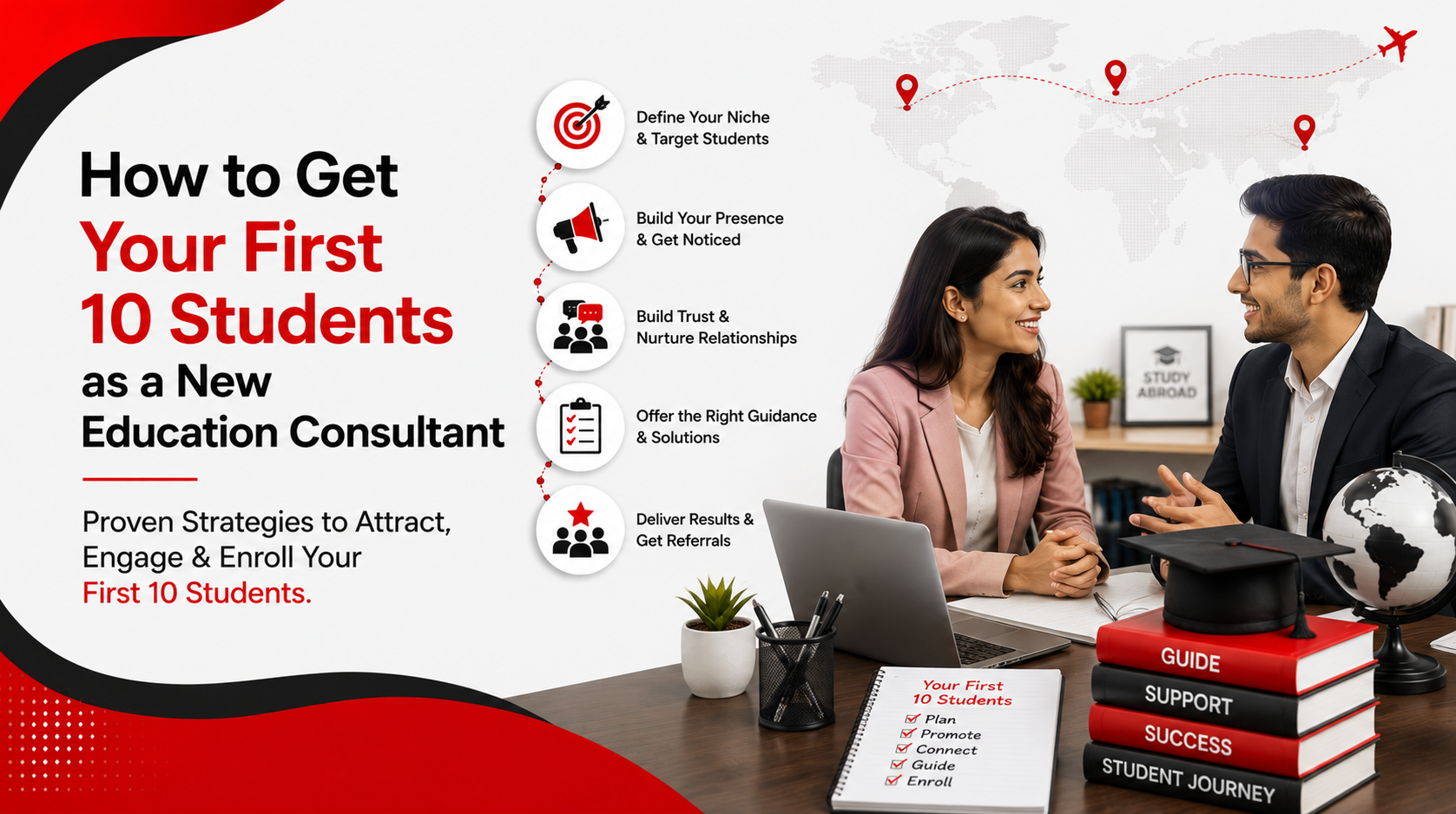

Starting an education consultancy sounds exciting until you face the question every new consultant eventually asks:
“Where do I actually find students?”
Most people assume the difficult part is understanding university admissions, visas, or application requirements. In reality, the biggest challenge usually arrives much earlier.
You can have excellent counselling skills. You can know the admission process inside out. You can spend weeks building a website and creating social media pages.
But none of that matters if no students walk through the door.
The good news is that your first 10 students are usually easier to find than your first 100. The mistake many new consultants make is believing they need a large office, a massive advertising budget, or years of university partnerships before they can start helping students.
They don’t.
In fact, many successful consultants across India, Vietnam, the Philippines, Indonesia, Malaysia, and other parts of Asia started with little more than a laptop, a network of contacts, and a willingness to help students navigate the study abroad process.
If you’re wondering how to get students for education consultancy growth, this guide breaks down practical strategies that work even when you’re starting from zero.
Why Your First 10 Students Matter More Than Your First 100
When people think about growing an education consultancy, they often focus on scale.
More students.
More universities.
More destinations.
More revenue.
But the first stage of growth is different.
At the beginning, your objective isn’t volume. It’s proof.
You need:
- Student success stories
- Testimonials
- Referrals
- Confidence in your counselling process
- Experience handling applications
Your first 10 students become the foundation for everything that follows.
That’s why your early focus should be on building trust rather than chasing large numbers.
Start With People Who Already Know You
This may sound obvious, but many new consultants completely overlook their existing network.
Before spending money on advertising, ask yourself:
Who already knows me?
Think about:
- Friends
- Family members
- Former classmates
- Professional contacts
- Teachers
- School counsellors
- College faculty
- LinkedIn connections
Some of them may have children considering overseas education.
Others may know someone who is.
The first few students often come from introductions rather than marketing campaigns.
A simple message can be surprisingly effective:
“I’ve recently started helping students with overseas education opportunities. If you know anyone exploring study options abroad, I’d appreciate an introduction.”
Many consultants get their first student through a referral rather than a lead generation campaign.
Build Trust Before You Sell Anything
Students don’t choose consultants because of fancy logos.
They choose consultants because they trust them.
Think about the decision from a parent’s perspective.
Studying abroad can involve tens of thousands of dollars.
Families are making life-changing decisions.
They’re not looking for salespeople.
They’re looking for guidance.
One of the best ways to establish credibility is by sharing useful information consistently.
For example:
- Visa updates
- Scholarship opportunities
- Admission timelines
- Country comparisons
- Career outcomes after graduation
When students repeatedly see helpful advice from you, they begin to associate your name with expertise.
That trust eventually turns into enquiries.
Create Educational Content That Answers Real Questions
One of the most effective forms of education consultancy marketing doesn’t feel like marketing at all.
It feels like helping.
Students constantly search for answers online:
- How much does it cost to study in Australia?
- Is Canada still good for international students?
- What GPA is required for UK universities?
- Which countries offer post-study work visas?
Every one of these questions is an opportunity.
Create content around them.
You can use:
Short Videos
A simple two-minute explanation often performs better than a professionally produced advertisement.
LinkedIn Posts
Particularly useful for reaching working professionals interested in postgraduate education.
Facebook Groups
Many student communities actively discuss overseas education opportunities.
Instagram Reels
Quick tips can generate surprising engagement among younger audiences.
The goal isn’t immediate conversions.
The goal is becoming visible where students already spend time.
Partner With Schools and Colleges
One student can become ten.
One institution can become hundreds.
Building relationships with schools and colleges remains one of the strongest long-term student acquisition channels.
You don’t necessarily need formal agreements.
Start small.
Offer:
- Free career guidance sessions
- Study abroad awareness seminars
- Scholarship workshops
- Country-specific webinars
Educational institutions often welcome knowledgeable speakers who provide value to students.
The exposure can be significant.
A single workshop may generate multiple consultations.
Host Webinars Instead of Waiting for Walk-Ins
Many new consultants expect students to discover them organically.
That’s rarely how it works.
Sometimes you need to create opportunities.
Webinars are a simple way to do that.
Topics could include:
- Studying in Canada in 2026
- UK student visa updates
- Scholarships for international students
- How to choose the right university
The objective isn’t to sell.
It’s to demonstrate expertise.
Students who attend educational sessions often become consultation leads later.
Use Student Success Stories Early
Even if you’ve only helped one student, that experience matters.
People trust evidence.
When a student receives an offer letter or secures admission, share the journey.
Discuss:
- Their background
- Their goals
- Challenges they faced
- The outcome achieved
Stories feel more authentic than advertisements.
Future students see themselves in those examples.
This creates confidence.
Learn How Referrals Actually Work
Most consultants say they want referrals.
Few create systems that encourage them.
After helping a student, don’t simply move on.
Stay connected.
Check in regularly.
Celebrate milestones.
Ask for feedback.
Satisfied students often refer friends naturally.
But sometimes they need a reminder.
A simple message can work:
“If you know anyone else considering overseas education, I’d be happy to help them as well.”
Referrals often become the highest-quality study abroad leads because trust already exists before the first conversation.
Be Active Where Students Are Already Searching
Students spend hours researching study options online.
You need to appear where that research happens.
Important channels include:
Google Business Profile
Many consultants ignore local search visibility.
Students frequently search:
- Study abroad consultant near me
- Overseas education consultant
- Student visa consultant
A complete profile improves discoverability.
Particularly effective for postgraduate recruitment.
Facebook Communities
Many student groups actively discuss admissions and visas.
WhatsApp Networks
Still incredibly powerful across Southeast Asia and South Asia.
Don’t Try to Sell Every Country
One mistake many new consultants make is trying to become experts in every destination immediately.
Students don’t expect that.
Initially, focus on a few destinations and understand them thoroughly.
Examples:
- Australia
- UK
- Canada
- Germany
When your expertise deepens, your confidence grows. Students notice the difference.
Build a Follow-Up Process
Many students don’t make decisions immediately.
Some enquire months before applying.
Without follow-up, opportunities disappear.
Create a simple process:
Day 1
Initial consultation.
Day 3
Share relevant program recommendations.
Day 7
Answer additional questions.
Day 14
Provide updates or new opportunities.
Monthly
Maintain communication.
Consistency often wins more students than aggressive selling.
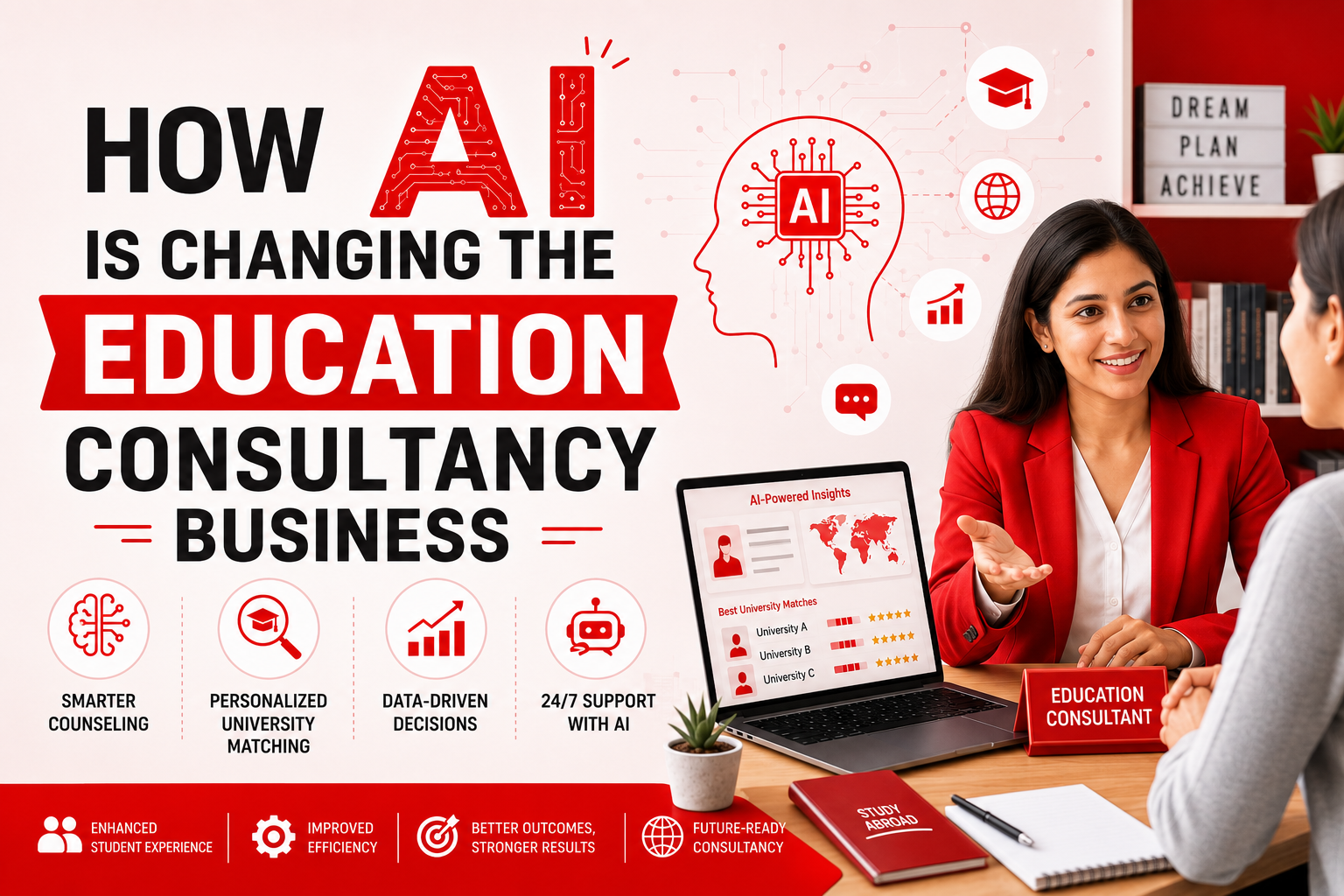
Use Technology to Work Smarter
Student recruitment today looks very different from a decade ago.
Tasks that once required hours can now be completed much faster.
For example:
- Program searches
- Eligibility matching
- Application tracking
- Document management
This allows consultants to focus more time on counselling and relationship building.
The best student recruitment strategies combine personal guidance with efficient systems.
Why Partnerships Matter for New Consultants
One of the biggest barriers for new consultants is university access.
Building direct agreements with institutions individually takes time.
Sometimes years.
That’s where recruitment platforms can accelerate growth.
Instead of negotiating with universities one by one, consultants gain access to multiple institutions through a single ecosystem.
This means:
- More options for students
- Faster application processes
- Wider destination coverage
- Reduced administrative workload
For someone trying to secure their first 10 students, that advantage can be significant.
Common Mistakes That Slow Down Growth
Waiting Until Everything Is Perfect
Many consultants delay launching because their website isn’t finished or their branding isn’t complete.
Students care more about expertise than design.
Focusing Only on Social Media
Social media helps.
But referrals, partnerships, and workshops often generate stronger results.
Ignoring Follow-Up
Many enquiries are lost simply because nobody followed up consistently.
Trying to Be Everything to Everyone
Specialization often creates trust faster than broad positioning.
What Your First 10 Students Can Teach You
Every student teaches something.
One may reveal gaps in your counselling process.
Another may show where your marketing is working.
A third may become your strongest referral source.
Pay attention.
The objective isn’t just recruiting students.
It’s building a repeatable system that can eventually scale.
Once you understand how those first 10 students found you, converting the next 50 becomes much easier.
How MSM Unify Helps New Education Consultants Grow Faster
Many new consultants spend months trying to establish university relationships, learn admission processes, and manage applications manually.
MSM Unify helps simplify that journey.
Through the platform, consultants can access:
- 1,500+ institutions worldwide
- Thousands of programs across major destinations
- Centralized application management
- AI-powered program matching
- Recruitment support resources
Instead of spending years building institutional partnerships individually, consultants can focus on what matters most, guiding students and growing their business.
For someone learning how to get students for education consultancy success, having the right infrastructure behind the scenes can make a meaningful difference.
Final Thoughts
The first 10 students rarely determine how large your consultancy will become, but they often determine whether it survives long enough to reach that stage. Every successful application gives you something valuable beyond revenue: a success story, a testimonial, a referral opportunity, and practical experience that improves your counselling process. By the time you’ve worked with your first handful of students, you’ll usually have a much clearer understanding of which marketing channels are producing enquiries, what questions families ask most often, and where prospective students need the most guidance.
FAQs
1. How can I get students for education consultancy when I’m just starting?
Begin with your personal network, educational content, webinars, referrals, and partnerships with schools or colleges.
2. What are the best education consultancy marketing strategies?
Content marketing, student success stories, workshops, webinars, local search visibility, and referral programs remain highly effective.
3. How do consultants generate study abroad leads?
Most consultants generate leads through referrals, social media, search engines, educational events, and institutional partnerships.
4. Do I need university partnerships before recruiting students?
Not necessarily. Many consultants begin by working through recruitment platforms that provide access to multiple institutions.
5. What are the most effective student recruitment strategies today?
Combining personalized counselling, digital marketing, referral systems, and technology-driven application management produces the strongest results.