









If you’re thinking of launching an overseas education consultancy in Southeast Asia (SEA) a few years ago, your first concern was likely connections.
How do I get in touch with universities?
“Will institutions even work with a small agency?”
“Can I start if I don’t have years of experience?”
These are still some of the most common questions people ask today.
And, truthfully, they make sense.
The outside view of the international education industry is complex. Students are applying to various countries, universities have different admission processes, visa requirements are constantly changing, and there is a lot of competition.
However, after you’ve learned how the industry really operates, you realise something important.
The most successful agencies were not the ones that began with massive staffs, high-priced offices, or close ties with hundreds of universities.
Many started small.
One counsellor. A simple office environment. Some student questions. Some partnerships. Things slowly evolved after that.
This is why more and more people are considering launching education consultancy Southeast Asia businesses, particularly in Vietnam, Indonesia, Malaysia, and the Philippines, where outbound student mobility is rapidly increasing each year.
There’s definitely an opportunity there. The more important question is how to establish trust and set up the business right from the beginning.
Why Southeast Asia Is One Of The World’s Fastest-Growing Outbound Student Markets
When one looks at the situation of families in the past decade in the Southeast Asian region, the clear message is that families invest in education in a different way today.
Previously, studying abroad was considered to be an option for only affluent students. In Vietnam, Indonesia, and the Philippines, middle-class families are now actively preparing for overseas education options for their children.
Exposure is a part of this change.
Students research universities, watch student vlogs, compare tuition fees, and understand career opportunities abroad for hours online. Parents are also much more aware now than they were ten years ago.
Countries like:
- Australia
- Canada
- UK
- Germany
- Ireland
These have gained tremendous popularity as students now view them as investments for their future careers rather than just places of education.
Vietnam, in particular, has emerged as one of the most powerful outbound markets in Southeast Asia. Many families there value international education as they feel that international degrees provide more career stability.
The Philippines is also steadily developing, as the English proficiency is already very high, making it easier for students to transition to overseas schools.
In the meantime, Indonesia and Malaysia are still churning out massive cohorts of students who are looking for overseas education opportunities on a regular intake season.
This is the reason why the overseas education business in the SEA market continues to grow annually.
Interestingly, many students still prefer to work with consultants rather than apply on their own because the process can become very confusing very quickly.
Students need help with:
- university selection
- SOPs and documentation
- visa applications
- scholarship guidance
- accommodation planning
- financial proof requirements
That’s where agencies come in handy. Not because students are not able to find information via Google. They can.
However, students are looking for someone who is clear, confident, and knowledgeable about the process.
What You Actually Need To Get Started (It’s Simpler Than You Think)
One of the biggest misconceptions in this field is that you have to have a lot of money to start.
You really do not.
In fact, many successful agencies across Southeast Asia started with very limited infrastructure.
The important thing is:
- destination knowledge
- communication skills
- counselling ability
- consistency
- trustworthiness
Many first-time entrepreneurs invest too much time and effort in office interior and branding without knowing the counselling process.
However, students do not often select consultants due to furniture.
They select consultants because they feel understood.
That changes everything.
The following states some of the things students will expect you to know if you are planning to be an overseas education consultant Vietnam:
- visa policies
- university options
- tuition ranges
- scholarships
- post-study opportunities
This also holds true for those who are working as study abroad consultants in the Philippines or establishing an education consultancy in Indonesia.
You have the most important asset in your business: knowledge.
The great news is that many Southeast Asian nations don’t have a complicated licensing process to begin an educational consulting company.
Registering a business is often the first step to getting started legally.
However, the compliance varies from country to country, so founders need to check the rules for registration carefully.
However, the entry barrier in the industry is still relatively low compared to many industries.
Step-by-Step: Setting Up Your Education Consultancy in Southeast Asia
Step 1 – Business Registration in Your Country
The first step is formalising your business properly.
Some people try to operate informally at the beginning, but that usually creates trust issues later. Parents and students feel more comfortable dealing with registered businesses, especially when international payments and university applications are involved.
If you are starting a study abroad agent business in Malaysia, you will typically need:
- company registration
- tax documentation
- banking setup
- service agreements
The process is fairly similar across Vietnam, Indonesia, and the Philippines too, although requirements differ slightly depending on local regulations.
At this stage, do not overcomplicate things.
You do not need:
- a huge office
- a large team
- expensive branding campaigns
You just need a legitimate setup and a clear service structure.
Step 2 – Building Your Destination Knowledge Base
This part matters far more than most people realise.
A lot of new consultants think they can “learn while selling.” That approach usually backfires.
Students ask very practical questions.
For example:
- Which country is affordable?
- What happens if visa rules change?
- Which universities offer scholarships?
- Can students work part-time?
- Which courses have better career outcomes?
You need real answers.
That means spending time understanding:
- admission systems
- student visa processes
- intake deadlines
- country-specific work rights
- post-study pathways
An experienced overseas consultant once said something very accurate during a student recruitment event:
“Students forgive delays. They do not forgive wrong guidance.”
That line stays relevant in this industry.
Because once a family loses trust, referrals disappear immediately.
And referrals are what actually grow agencies long-term.
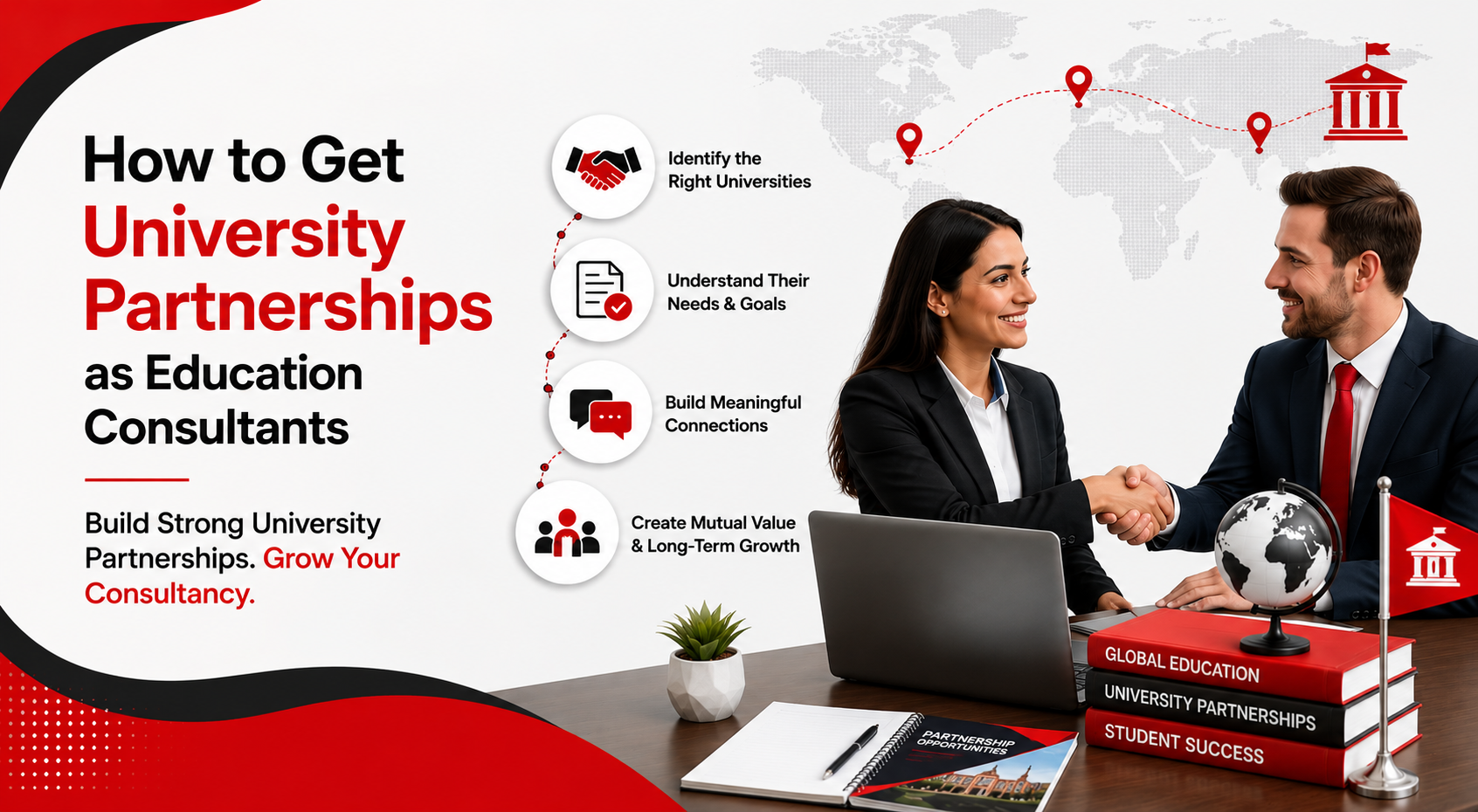
Step 3 – Partnering With Institutions (The Shortcut)
This is where many new agencies struggle unnecessarily.
They assume they need direct agreements with hundreds of universities before they can start counselling students.
That is not true anymore.
Today, many agencies grow through aggregator and recruitment partnership platforms instead of building every institutional relationship individually.
This saves years of effort.
Instead of spending months trying to connect separately with universities in Australia, Canada, the UK, or Europe, agencies can work through existing recruitment ecosystems.
That is one reason many new agencies choose platforms like MSM Unify.
Rather than negotiating university partnerships one by one, agencies can access 1,500+ institutions across major destinations through a single platform partnership.
For first-time founders, this changes everything operationally.
It allows them to focus more on:
- student counselling
- conversion quality
- destination expertise
- digital marketing
- building local trust
Instead of getting stuck in partnership administration.
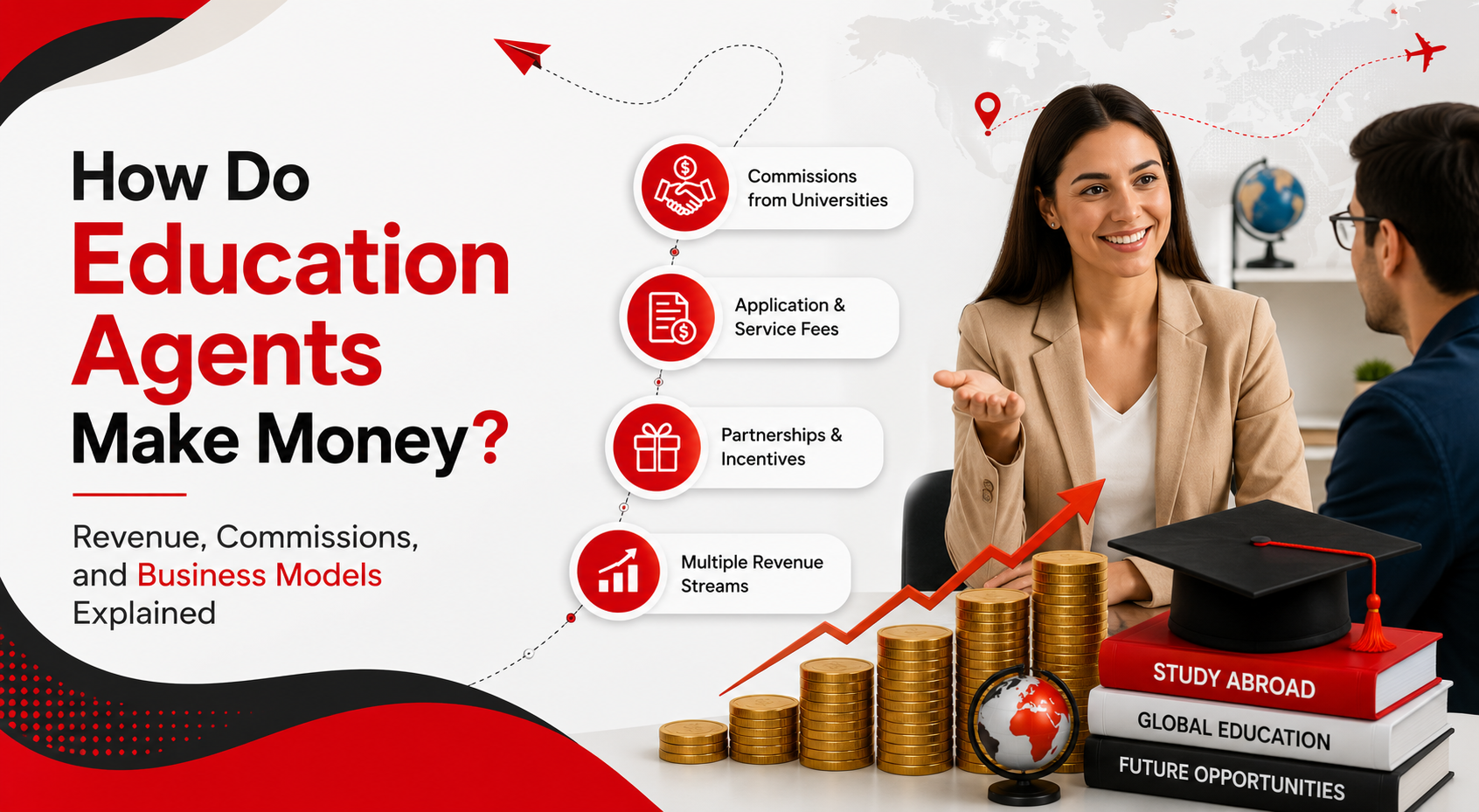
Step 4 – Setting Up Your Revenue Streams
A lot of people assume education agencies earn only through university commissions.
That is only part of the picture.
Most agencies earn through multiple revenue channels, including:
- institutional commissions
- counselling fees
- application support charges
- visa assistance
- accommodation services
- test preparation guidance
Some agencies prefer charging students directly for premium counselling support. Others rely mostly on commissions from institutions.
Both models work.
The important thing is transparency.
Families today are much more informed than before. If pricing feels unclear or recommendations look commission-driven, students lose confidence quickly.
That is why ethical counselling matters so much in this business.
Interestingly, agencies that focus too aggressively on “high commission destinations” often struggle with long-term referrals because students eventually realise when recommendations are not genuinely student-focused.
The agencies that survive usually balance business goals with honest counselling.
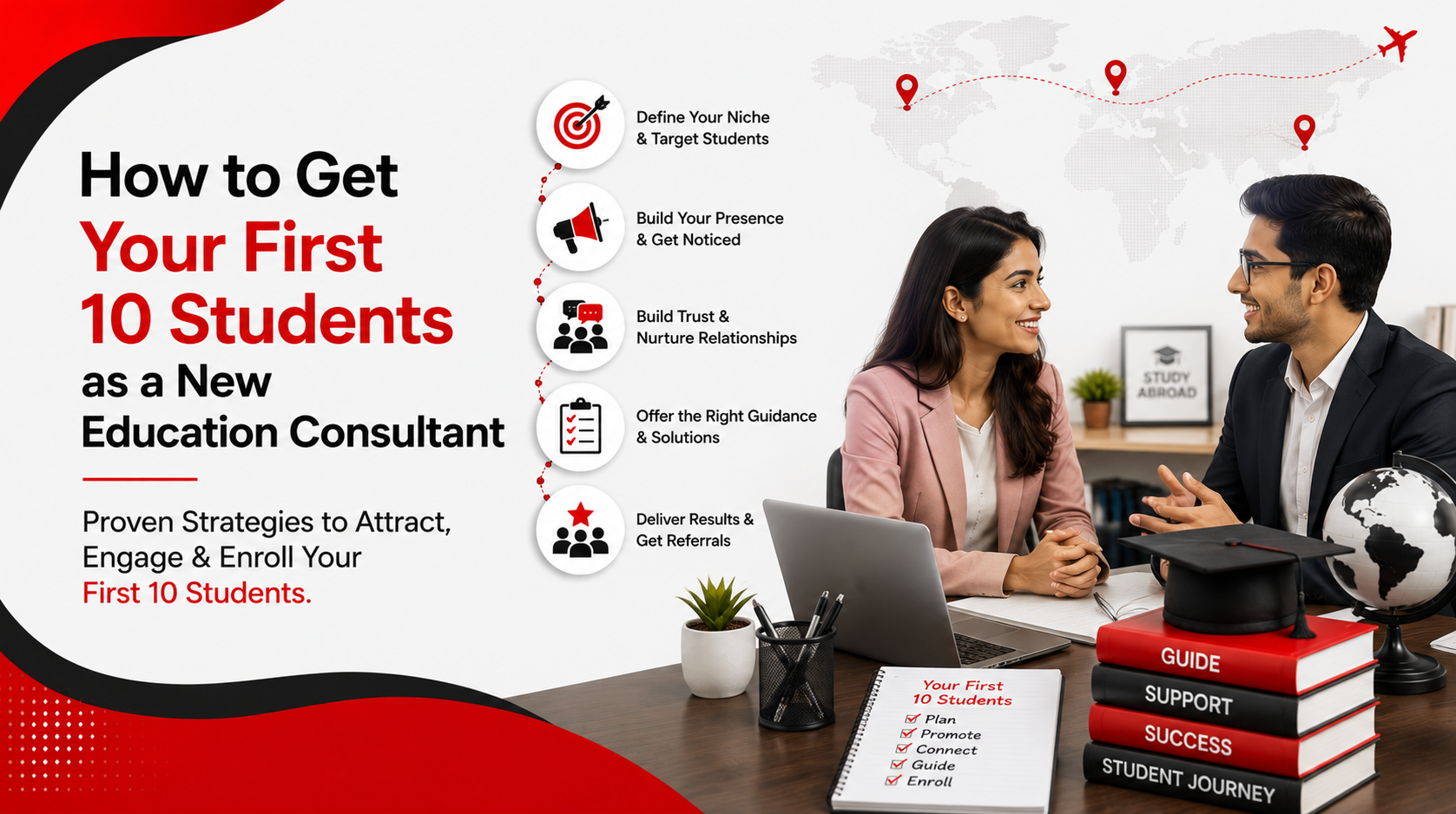
Step 5 – Building Trust and Getting Your First Students
This is probably the hardest part in the beginning.
Not because students do not exist. They absolutely do.
The challenge is credibility.
When you are new, students naturally ask:
- Why should we trust you?
- How many students have you helped?
- Which universities do you work with?
This is why early-stage agencies should focus heavily on personalised counselling instead of trying to scale immediately.
Your first few students matter more than your first hundred leads.
Satisfied students bring:
- referrals
- testimonials
- repeat visibility
- parent trust
And in Southeast Asia especially, referrals still drive a huge part of the education consulting industry.
Social media also plays a major role now.
Many agencies get their first student inquiries through:
- Instagram reels
- Facebook communities
- TikTok student content
- webinars
- WhatsApp groups
The agencies growing fastest are usually the ones that educate consistently online instead of just advertising constantly.
Common Mistakes New Education Consultants In SEA Make
One mistake new agencies make very early is trying to target every destination at once.
That sounds ambitious, but it usually creates confusion internally.
It is much smarter to begin with:
- 2 or 3 strong destinations
- clear university partnerships
- solid process understanding, and then expand gradually.
Another common problem is overpromising outcomes.
Some agencies talk too confidently about:
- guaranteed visas
- permanent residency
- guaranteed scholarships
That approach may help short-term conversions, but it damages trust very quickly later.
Students today cross-check everything online anyway.
So honesty actually becomes a competitive advantage.
Another issue is weak follow-up systems.
Many agencies generate leads successfully but lose students because communication becomes inconsistent during applications.
Students applying abroad already feel anxious. If consultants disappear for days without updates, trust breaks immediately.
And finally, some agencies underestimate how important counselling quality really is.
Students remember how you made them feel during the process.
That emotional part matters more than many consultants realise.
Final Thoughts
When you’re starting an education consultancy, it can seem like there are too many moving parts to keep track of, including universities, visas, students, documentation, deadlines, and more. However, when you start to really get it, you realise that this business is not infrastructure-based, but rather relationship-based.
Students don’t want to have perfect consultants. They are seeking reliable advice. It’s what really develops agencies in the long run.
But, on a serious note, there is still a lot of space for good counsellors in Southeast Asia who really care about assisting students to make informed decisions. Once that trust is established on a regular basis, growth will follow.
After setting up, sign up as an MSM Unify Agent and bypass years of bilateral university negotiations and gain instant access to 1,500+ partner universities in all major study destinations.
FAQs
How do I become an education agent in Southeast Asia?
Start by understanding overseas admissions, student visa systems, and destination requirements. Then register your business, build institutional partnerships, and begin counselling students.
Do I need university tie-ups before starting?
No. Many agencies now work through global recruitment platforms that already provide access to universities and institutions worldwide.
Is the overseas education business SEA market profitable?
Yes, but profitability depends heavily on counselling quality, destination expertise, conversion rates, and long-term student trust.
Which Southeast Asian country has the strongest study abroad demand?
Vietnam and the Philippines currently show particularly strong outbound student demand, although Indonesia and Malaysia are also major growth markets.
Can I run an education consultancy from home initially?
Yes. Many agencies begin virtually before expanding into physical office operations later.
How do Education Consultants earn money?
Most agencies earn through:
- university commissions
- counselling fees
- visa support services
- application processing
- accommodation assistance