







Many people think that an education agent just “helps students apply abroad.”
In fact, the task is much greater than that.
A good education agent becomes more of a counsellor, a career advisor, a problem solver, and sometimes even an emotional support for parents and students who are nervous about making one of the biggest financial decisions of their lives.
The role of an education consultant is not just about paperwork, particularly in Southeast Asia, where family engagement in education decision-making is very high.
Parents want to be reassured, students need clarity, universities want complete applications, and visa systems want accuracy.
This means that those involved in international student recruitment are always juggling expectations from several angles.
In the meantime, the industry has undergone tremendous evolution over the past few years.
Students today make comparisons of countries differently. Families ask more questions about return on investment. Visa requirements are more likely to be subject to change. Technology has revolutionized application processing and management.
That is why it is more important than ever to know how education agents recruit international students, particularly for those hoping to become consultants in Vietnam, the Philippines, Indonesia, Malaysia, and other booming Southeast Asian markets.
The positive side is that this sector continues to expand at a fast rate throughout the region.
Unlike many professions, though, you don’t have to have years of experience to get started.
However, you do have to know the steps involved in the process from start to finish.
What Does an Education Agent Actually Do Day-to-Day?
The biggest misconception about this industry is that education consultants spend most of their time “selling universities.” Well, that’s not the way the job goes these days. Recruitment of students today is more advisory in nature.
Students are not just asking:
“Which university should I apply to?”
They are asking things like:
- Will this degree help me get a job later?
- Which country has better visa options?
- Can my family afford this?
- What are my chances of getting approved?
- Should I study business or data analytics?
- Is Canada still a good option?
A modern education agent guides students through all of those decisions. Most importantly, agent services are free for students.
Many people who are new to the industry are surprised by this. Education agents typically make money by commission from the universities and colleges that they refer students to, rather than from the students themselves. This is where trust is crucial. When a student has a successful outcome, the agency’s reputation grows.
An education consultant can help on a typical day by:
- Speak with students and parents
- Review academic transcripts
- Explain visa pathways
- Shortlist universities
- Coordinate SOPs and documentation
- Follow up with institutions
- Guide students through visa preparation
- Handle pre-departure counselling
In Southeast Asia, building relationships is a big deal, particularly.
A student from Vietnam or the Philippines might include parents, siblings, and extended family members in the decisions. Consultants should be patient, have communication skills, and be able to present complex information in a comprehensible manner.
Truthfully, that can be the difference between mediocre agents and excellent ones.
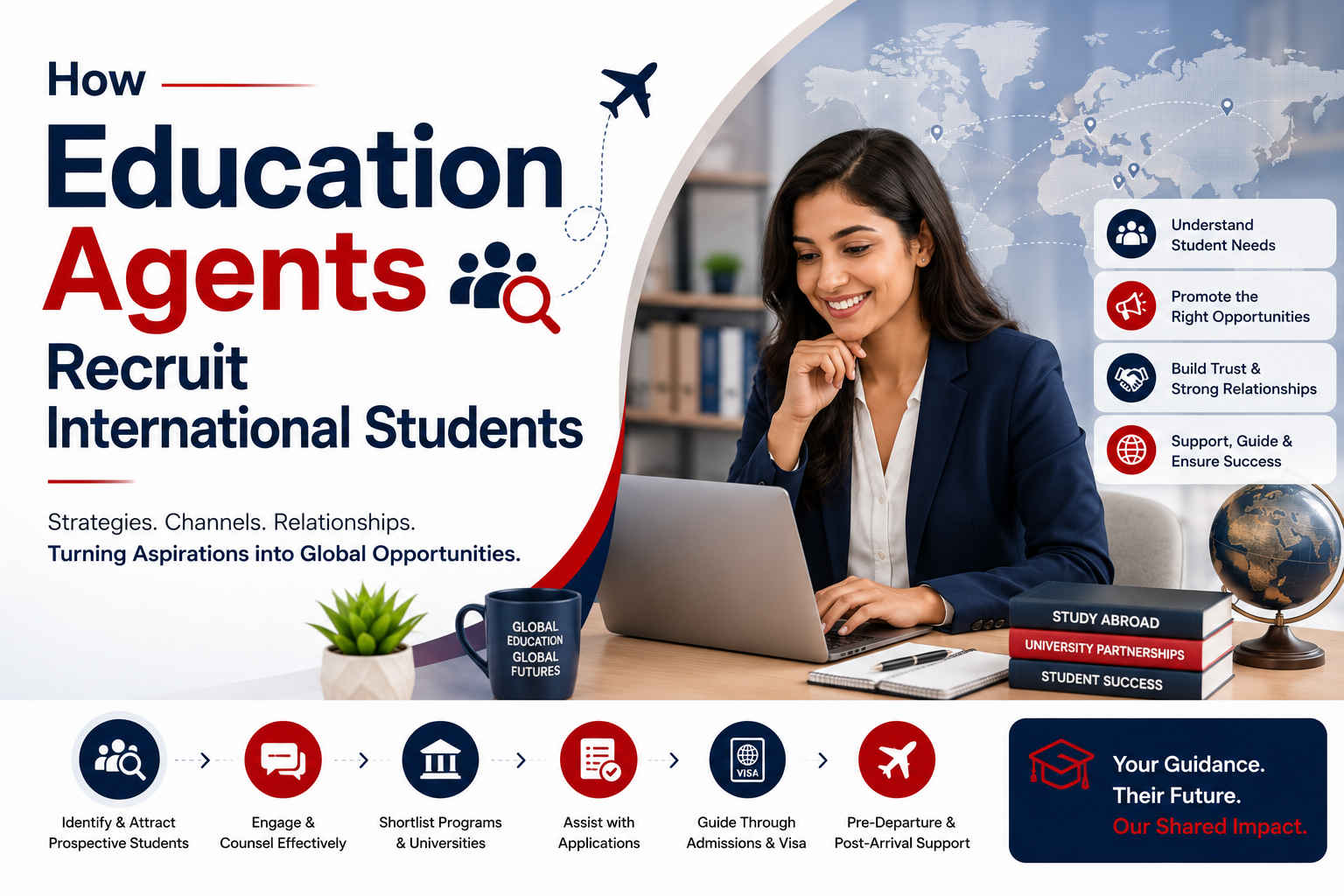
The Student Recruitment Journey from First Inquiry to Enrolment
Every international student application follows a journey. Some students move through it quickly. Others take months before making a final decision.But the stages themselves are usually very similar.
Stage 1 – Lead Generation and First Contact
Every recruitment journey starts with a student inquiry.
Sometimes the lead comes through social media. Sometimes through referrals. Sometimes through school seminars, webinars, or online campaigns.
For example, imagine a student named Angela from the Philippines.
She recently completed high school and wants to study business abroad. Her parents are interested in Australia, but they are worried about costs and visa approval rates.
Angela finds an education consultancy through Instagram and books a free counselling session.
That first interaction matters more than many new agents realise.
Students are not just evaluating destinations at this stage. They are evaluating whether they trust the consultant.
Good agents ask thoughtful questions early:
- What are your career goals?
- What is your budget range?
- Do you plan to work after graduation?
- Are scholarships important?
- What kind of learning environment do you want?
This stage is less about “selling” and more about understanding.
Strong consultants know that rushing students too quickly often creates problems later.
Stage 2 – Understanding the Student’s Goals and Profile
This is where real counselling begins.
An experienced consultant looks beyond grades alone.
For example, two students may both want to study computer science, but their long-term goals could be completely different.
One may want immigration pathways.
Another may care more about internship opportunities.
A third student may simply want affordable tuition.
Good agents learn how to align destinations with goals instead of giving every student the same country recommendation.
This stage usually involves reviewing:
- Academic history
- English proficiency
- Financial background
- Career interests
- Preferred countries
- Family expectations
- Visa eligibility
And honestly, this is one area where inexperienced agents struggle.
Because recruitment today is no longer just about admission.
It is about employability.
Students increasingly want to know:
“What happens after graduation?”
That means education consultants now need at least basic understanding of job markets, post-study work opportunities, and industry demand across different countries.
Stage 3 – Shortlisting Programs and Institutions
This used to be one of the most time-consuming parts of the process.
Consultants would manually compare universities, tuition fees, admission requirements, scholarships, and visa success trends across dozens of websites.
Now, technology has changed that completely.
Modern recruitment platforms use AI-powered program matching tools that can shortlist suitable institutions in minutes based on a student’s profile.
That allows consultants to focus more on guidance instead of repetitive admin work.
For Angela from the Philippines, for example, a consultant may shortlist:
- Business programs in Australia
- Affordable management degrees in Ireland
- Scholarship-friendly UK institutions
- Emerging destinations like Dubai or Europe
The goal is not simply to give “more options.”
The goal is to provide realistic options aligned with the student’s goals and budget.
That’s an important difference.
Stage 4 – Application Preparation (SOP, LOR, Documents)
This stage often looks simple from the outside.
But this is where many applications succeed or fail.
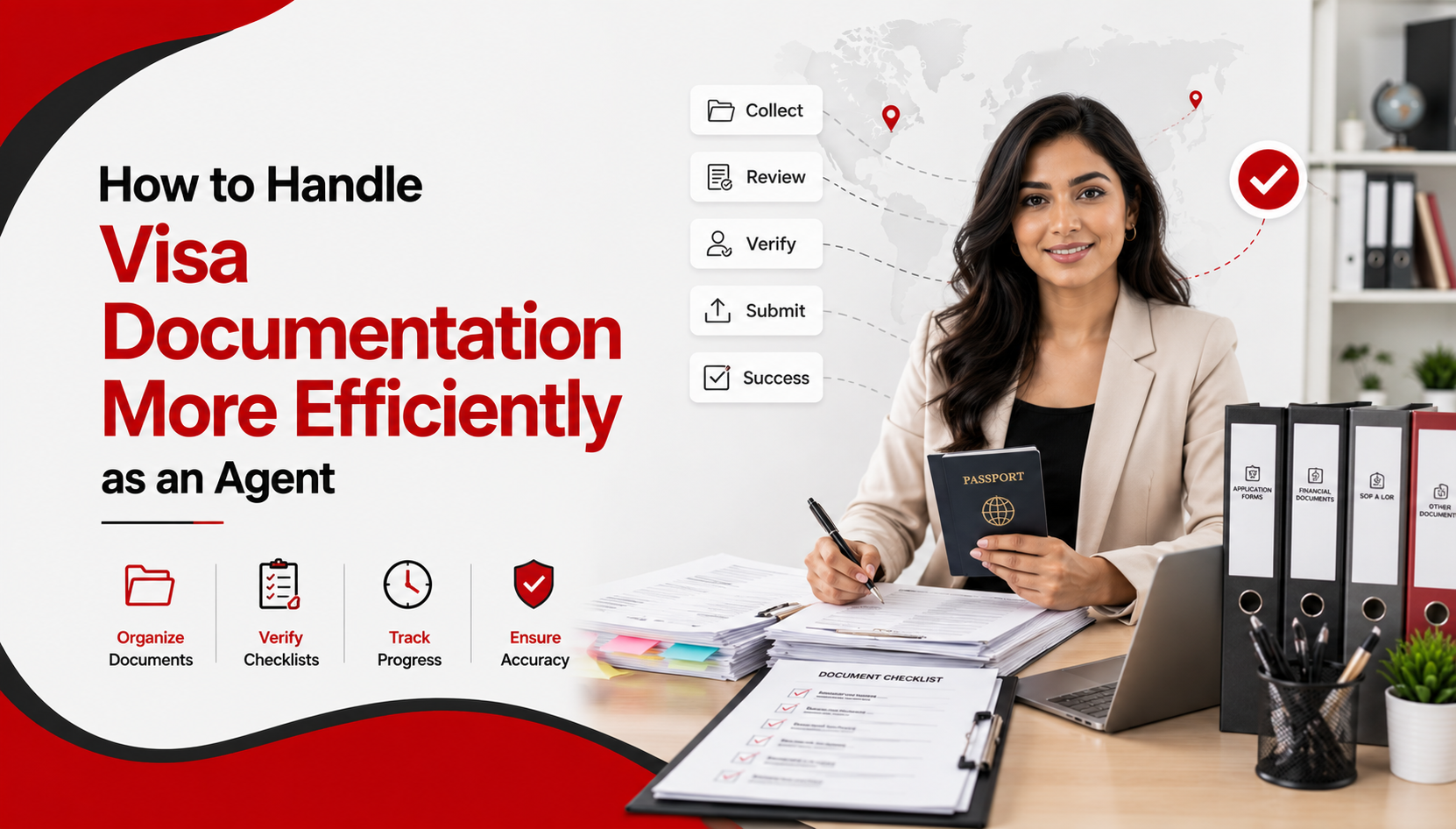
Students need help organizing:
- Academic transcripts
- English test scores
- Passport documents
- Financial records
- Statement of Purpose (SOP)
- Letters of Recommendation (LOR)
- Resume or CV
Many students in Southeast Asia are applying internationally for the first time. They often feel overwhelmed by documentation requirements.
And honestly, SOP guidance has become one of the biggest parts of the consultant’s role today.
Students are expected to explain:
- Why they chose a course
- Why they selected a country
- Their career goals
- How the degree fits their future plans
A weak SOP can hurt both admission chances and visa outcomes.
Good consultants do not simply “write SOPs” for students.
They help students structure authentic stories properly.
That distinction matters.
Stage 5 – Offer Management and Acceptance
Once universities begin issuing offers, another set of decisions begins.
Students compare:
- Tuition fees
- Scholarships
- City preferences
- Visa processing times
- Accommodation
- Internship opportunities
- Graduate employability
Families often become more involved at this stage.
Especially in Vietnam and Indonesia, parents usually want detailed financial breakdowns before making final decisions.
A consultant’s role here is to simplify complexity.
Students are already stressed.
The best agents reduce confusion rather than adding more information overload.
Stage 6 – Visa Guidance and Pre-Departure Support
For many students, the visa stage feels the most stressful.
And understandably so.
A rejection here affects months of planning.
Good education consultants help students prepare properly by reviewing:
- Financial documents
- Visa interview preparation
- Genuine student statements
- Health insurance
- Accommodation planning
- Travel preparation
Pre-departure guidance also matters more than many people realise.
Students moving abroad for the first time often have questions that go beyond academics:
- What should I pack?
- How expensive is daily life?
- Can I work part-time?
- What happens after arrival?
The agencies students remember positively are usually the ones that continue supporting them even after admission.
That creates long-term referrals – which remain one of the biggest growth drivers for education consultancies across Southeast Asia.
Skills Every Successful Education Agent in Southeast Asia Needs
A lot of people entering this field assume success mainly depends on university partnerships.
In reality, people skills matter just as much.
The strongest education consultants are usually very good at:
- Listening carefully
- Explaining things clearly
- Managing expectations
- Building trust
- Staying calm under pressure
- Solving unexpected problems
Of course, technical knowledge matters too.
Agents need to understand:
- Visa systems
- Program structures
- English language requirements
- Admission deadlines
- Scholarship processes
- Immigration updates
But students rarely remember consultants because of “technical expertise” alone.
They remember how supported they felt during a stressful process.
That emotional side of counselling is especially important in Southeast Asia.
How Technology Has Changed Recruitment And What It Means for New Agents
Ten years ago, education consultancies operated very differently, applications were slower, university communication was fragmented, and everything depended heavily on manual coordination.
Today, technology has changed almost every stage of the recruitment process.
Modern platforms now provide:
- AI-powered course matching
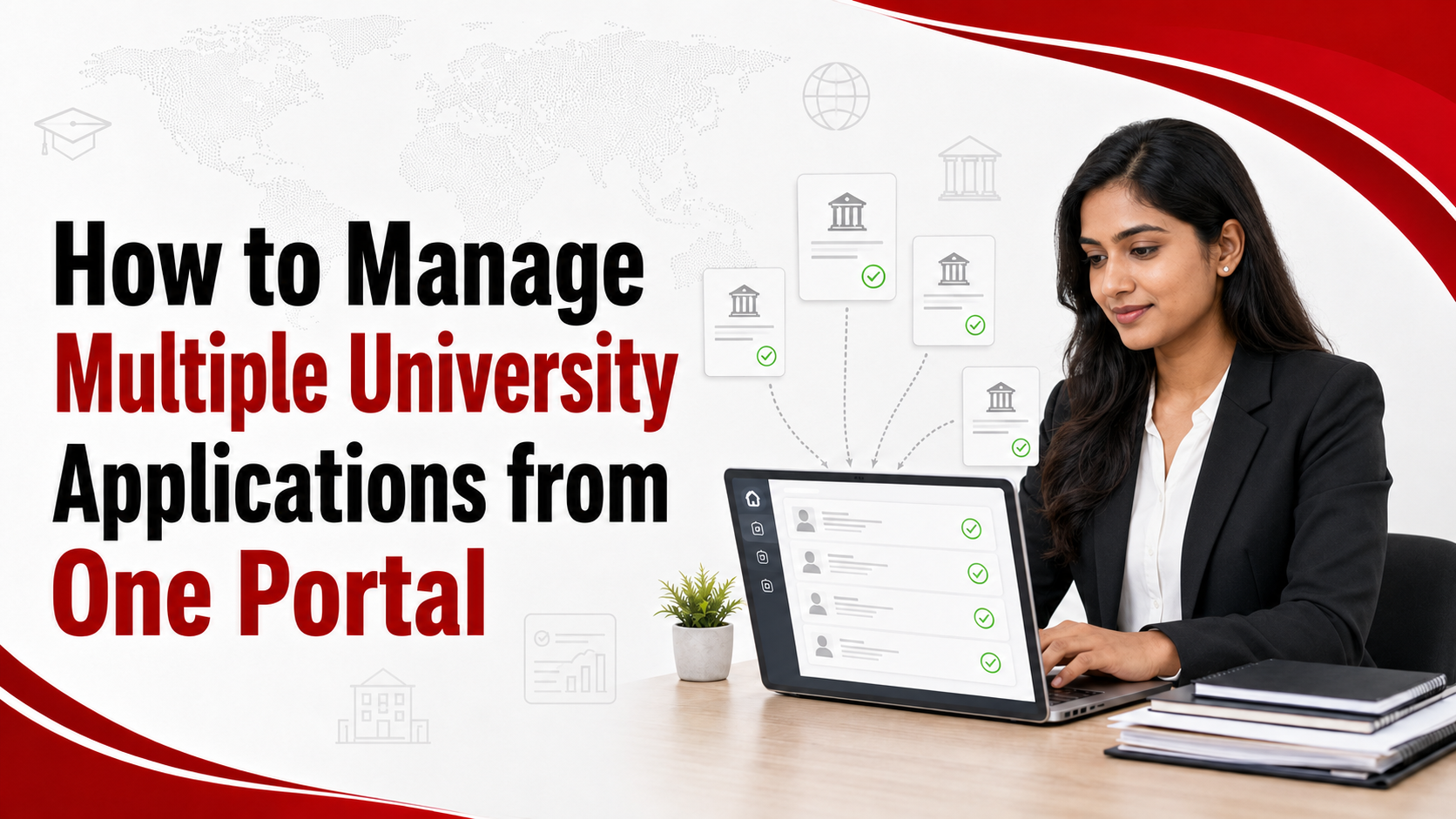
- One-form multi-institution applications
- Automated status tracking
- Digital document management
- Integrated communication systems
- Faster offer processing
This is actually very good news for new agents.
Because entering the industry no longer requires building hundreds of direct university relationships manually from scratch.
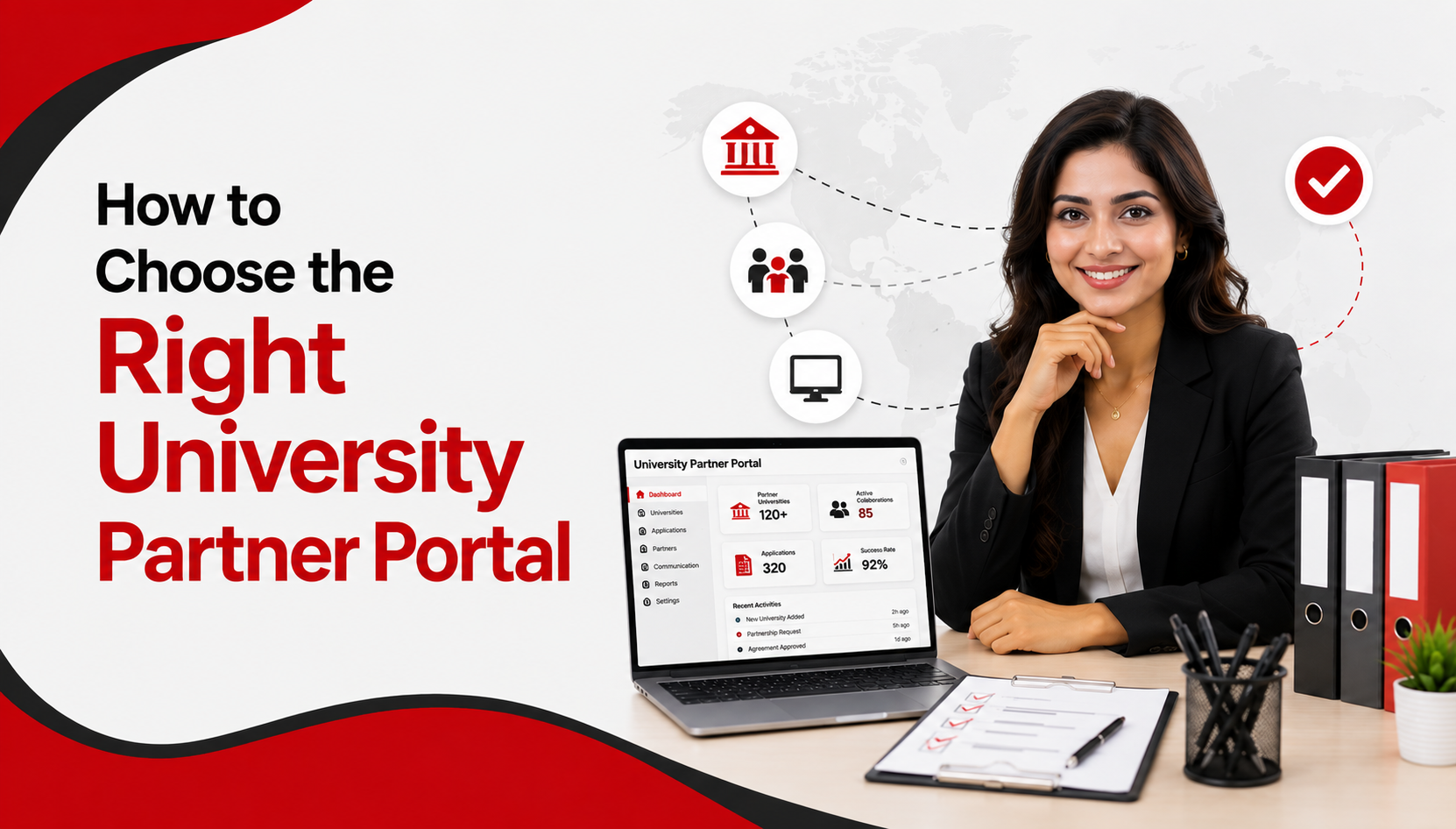
Platforms like MSM Unify give agents access to a large institutional ecosystem immediately, allowing smaller agencies and independent consultants to operate more competitively from the beginning.
That changes the barrier to entry significantly.
Especially for aspiring consultants in Southeast Asia who may have strong counselling skills but limited institutional networks initially.
Final Thoughts
The international student recruitment industry is much more relationship-driven than most people realise.
At its core, this work is about helping students make life-changing decisions with confidence.
Yes, applications and visas matter.
But students are really looking for clarity, trust, and guidance during a very uncertain process.
That is why strong education agents continue to stay relevant even as technology evolves. The tools may change. But students will always need informed human guidance. And for people in Southeast Asia exploring this profession, the timing is still very promising.
Outbound student demand across Vietnam, Indonesia, the Philippines, Malaysia, and Thailand continues to grow steadily. Families are investing more heavily in international education. And institutions globally continue relying on recruitment partners to connect with qualified students. The opportunity is very real.
But the agents who succeed long-term are usually the ones who focus less on “selling destinations” and more on genuinely helping students make better decisions.
Start your journey as an education agent with MSM Unify: access AI-powered program search, one-form multi-institution applications, and full support for every stage of the student journey. Register today.