Study in Canada
A hassle-free visa process, affordable tuition fees, and highly-ranked universities are some of the many reasons why Canada is the most sought-after study-abroad destination.
Study in Australia
Every year over 637,000 International students choose to study in Australia for a variety of reasons such as the availability of several undergraduate, postgraduate, and part-time work programs.
Know what exams and tests you need for admission and advancement.
Things to do before going abroad for studies
A Strategic Focus on Istanbul. How Turkiye became one of the world's fastest-growing international student destinations, and what this means for your institution.
Free Download
Join thousands of education professionals accessing strategic intelligence on emerging study destinations.
By downloading, you agree to our Privacy Policy. We respect your data and will not share it with third parties.
As traditional study destinations grapple with rising costs, visa restrictions, housing shortages, and political headwinds, a decisive reconfiguration is underway. International student flows are redistributing, and Turkiye has emerged as one of the most prominent beneficiaries of this shift.
Over the past decade, international student enrollment in Turkiye has expanded nearly sevenfold. This MSM Monitor Series report unpacks the structural forces behind this growth and identifies the strategic opportunities and friction points shaping Turkiye's trajectory as a global education hub.
With a strategic lens on Istanbul, the country's academic powerhouse, this report arms institutions, agents, and policymakers with the intelligence needed to act decisively in one of 2026's most dynamic education markets.
"Turkiye's rise as an international education destination is not a trend. It is a structural shift driven by affordability, quality, and geographic advantage. This report captures precisely what institutions need to know."
Dr. Osman Gultekin, Ph.D. , Director of International Relations, Istanbul Aydin University
International student enrollment has grown nearly sevenfold over the past decade, one of the fastest expansions of any non-traditional study destination globally.
Over 240,000 international students are currently enrolled in Turkish universities, with Istanbul alone accounting for the largest share of this cohort.
Students from 207 countries now study in Turkiye, a diversity of origin that rivals the world's most established destination markets.
Tuition and living costs in Turkiye are estimated to be up to 70% lower than in leading Western destination countries, making it compelling for cost-conscious students.
Turkiye hosts over 200 higher education institutions, with several Istanbul universities ascending global rankings across engineering, medicine, and social sciences.
Three primary source-market corridors, Central Asia and CIS, Middle East and North Africa, and Sub-Saharan Africa, account for the bulk of inbound student volume.
"Turkiye is not simply benefiting from the problems of others. It has built a genuine value proposition, with recognized degrees, urban cosmopolitanism, and a cost structure that Western universities simply cannot match."
MSM Monitor Series, Turkey Intelligence Report, 2026
The post-pandemic era has exposed deep structural vulnerabilities in the world's traditional study destinations. Escalating visa processing times, surging rental markets, political rhetoric targeting international students, and tuition inflation have converged to create a flight-to-value dynamic. Students and the agents advising them are actively reweighing their options. Turkiye sits squarely in the reallocation.
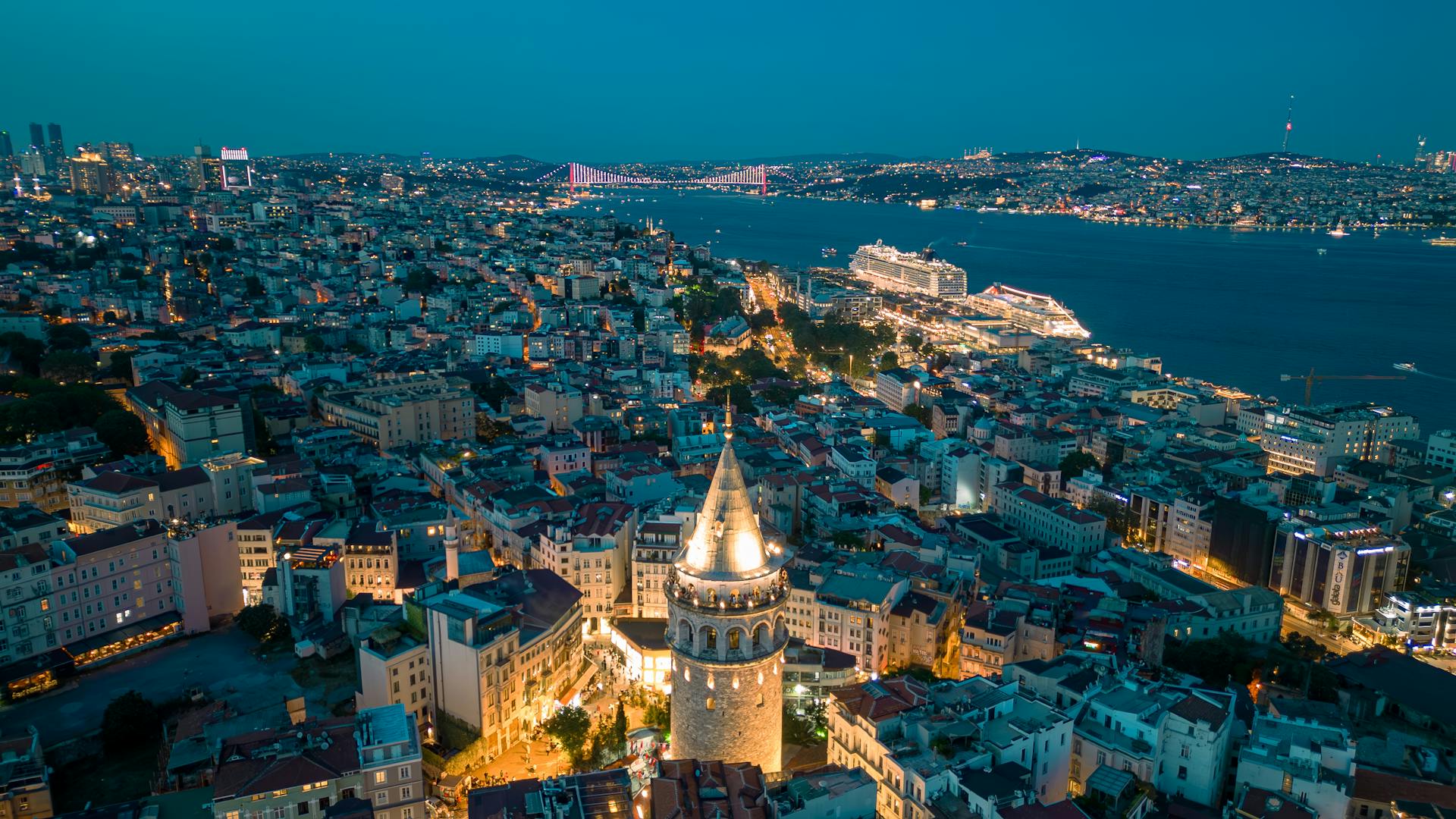
Istanbul is not just Turkiye's largest city. It is its most internationalized academic market. The city hosts a concentration of universities that rivals many national higher education systems in size. Several institutions have made aggressive investments in English-medium programs, scholarship offerings, and agent network development, competing directly for the same source markets as European and North American rivals.
The full source-market breakdown reveals a nuanced picture that extends well beyond simple geographic proximity. While CIS nations have historically formed the backbone of Turkish international recruitment, the MENA corridor is accelerating fastest, driven by affordability alignment and cultural familiarity. Sub-Saharan Africa represents the most underpenetrated corridor, with significant upside for early-mover institutions...
Currency instability remains Turkiye's most persistent structural risk for international student recruitment. The lira's volatility creates real-term cost unpredictability for students paying in foreign currencies. The report models three scenarios and identifies the threshold at which cost advantage erodes, a critical planning input for institutions building long-term Turkey strategies...
Istanbul occupies a unique position in the global education landscape, a megacity straddling Europe and Asia with a university ecosystem of extraordinary scale. For international students, it offers a genuinely cosmopolitan urban experience at a price point that no comparable Western city can come close to matching.
For institutions and agents, Istanbul represents both the greatest opportunity and the most competitive arena in Turkish higher education. The full report maps the competitive landscape in detail.
Indicative data. Full breakdown with source-country granularity available in the complete report.
Understand Turkiye's competitive positioning, identify partnership opportunities, and benchmark institutional performance against peers.
Access the market intelligence needed to counsel students on Turkiye as a destination, with data on costs, outcomes, visa processes, and top institutions.
Map source-market corridors, identify high-growth channels, and build evidence-based recruitment strategies for the Turkish market.
Gain a system-level view of Turkiye's higher education trajectory, with projections through 2030 and benchmarking against competitor destinations.
The institutions and agents who move early on emerging markets capture disproportionate share. Turkiye's window of low-competition, high-growth opportunity is narrowing as global awareness builds.
MSM Monitor Series, 2026
A Strategic Focus on Istanbul
Free Download
Complete the form to receive your free copy of the Turkey Intelligence Report.
Your details are safe with us. View our Privacy Policy.
MSM Monitor Series ยท 2026 Intelligence Report
A Strategic Focus on Istanbul
Endorsed By
"Turkiye's rise as an international education destination is not a trend. It is a structural shift driven by affordability, quality, and geographic advantage."
Executive Summary
International higher education is undergoing a decisive reconfiguration. As traditional destinations face rising costs, visa tightening, housing shortages, and political scrutiny, student mobility is increasingly redistributing toward countries that can offer recognized qualifications, affordability, and scalable capacity. Turkiye has emerged as one of the most prominent beneficiaries of this shift.
Over the past decade, international student enrollment in Turkiye has expanded nearly sevenfold. This report unpacks the structural forces behind this growth and identifies the strategic opportunities and friction points shaping Turkiye's trajectory as a global education hub.
This report is structured around the key strategic questions that matter to institutions, agents, and policymakers operating in or considering the Turkish market. It draws on enrollment data, institutional surveys, and market intelligence gathered across Turkiye's higher education ecosystem.

Strategic Focus
Istanbul is not simply Turkiye's largest city. It is the country's most internationalised academic market and the primary driver of enrollment growth. The city hosts more than 50 universities that actively recruit international students, spanning both state-funded and private foundations.
"Istanbul offers something no other city at this price point can: genuine metropolitan scale, a crossroads culture, and a university ecosystem that is expanding its global orientation at pace."
MSM Monitor Series Analysis, 2026Istanbul's competitive advantage rests on four pillars: program depth (with English-medium offerings across all major disciplines), cost competitiveness, geographic accessibility (served by one of the world's busiest airports), and institutional ambition.
Top Source Regions, Istanbul Universities
Source Market Analysis
Three primary source-market corridors account for the majority of inbound international student volume to Turkiye. Each corridor is driven by distinct motivations, responds to different recruitment stimuli, and presents a different risk and opportunity profile for institutions.
Corridor 1: Central Asia and CIS. Historically the largest and most established source of international students for Turkiye, this corridor is driven by linguistic and cultural proximity, scholarship availability through state programs, and strong alumni networks.
Corridor 2: Middle East and North Africa. The MENA corridor is currently the fastest-growing source region by volume. Enrollment from MENA markets has accelerated sharply following visa tightening in the UK, Canada, and Australia, with students actively seeking affordable alternatives with recognized qualifications.
Corridor 3: Sub-Saharan Africa. The most underpenetrated high-growth corridor. Sub-Saharan African enrollment in Turkiye has grown significantly but remains well below the market's structural potential. Institutions with early-mover positioning in Nigeria, Ghana, Ethiopia, and Kenya are capturing disproportionate share.
You've reached the end of the free preview
Get complete access to all 7 chapters, including competitive benchmarking, risk modeling, and strategic recommendations. It's completely free.
No payment required. Instant access on form completion.